November 22, 2012

Week Four: Pinhole Practice Continued

'Cracker Cam'
Pinhole camera made from a cream cracker


Week Three: Further Pinhole Research

Bethany De Forest

Bethany De Forest is a pinhole photographer who works by creating her own fantasy worlds using everyday accesable objects such as food, insects and other materials. She makes fantasy worlds in a case or box and builds up a set, much like a child furnishes a dolls house before photographing the final outcome with a pinhole camera. The result is a quirky and brightly coloured image which screams out adventure and magic. I find her work to have an almost Alice In Wonderland feel to it.

Abelardo Morell

In the above series of photographs, Morell's pinhole images involve reflecting the view from a window onto the wall from that bedroom. 

Stephen Gill

The above images are from Gill's series: Outside In. 
"Recently, I've been trying to photograph not just what the place looks like, but also trying to include as much as I can of what it feels like. I started collecting little bits of stuff from actual places, and then putting them inside the camera. Bits of plant life, seeds, or glass: I drop them in just before loading the film. I've even used insects. These objects then sit on the film emulsion when I'm taking the picture. It's a way of encompassing the actual essence of a place in an image, the visual noise and chaos." - Stephen Gill, extract from The Guardian online article 'Photographer Stephen Gill's Best Shot' (full interview)

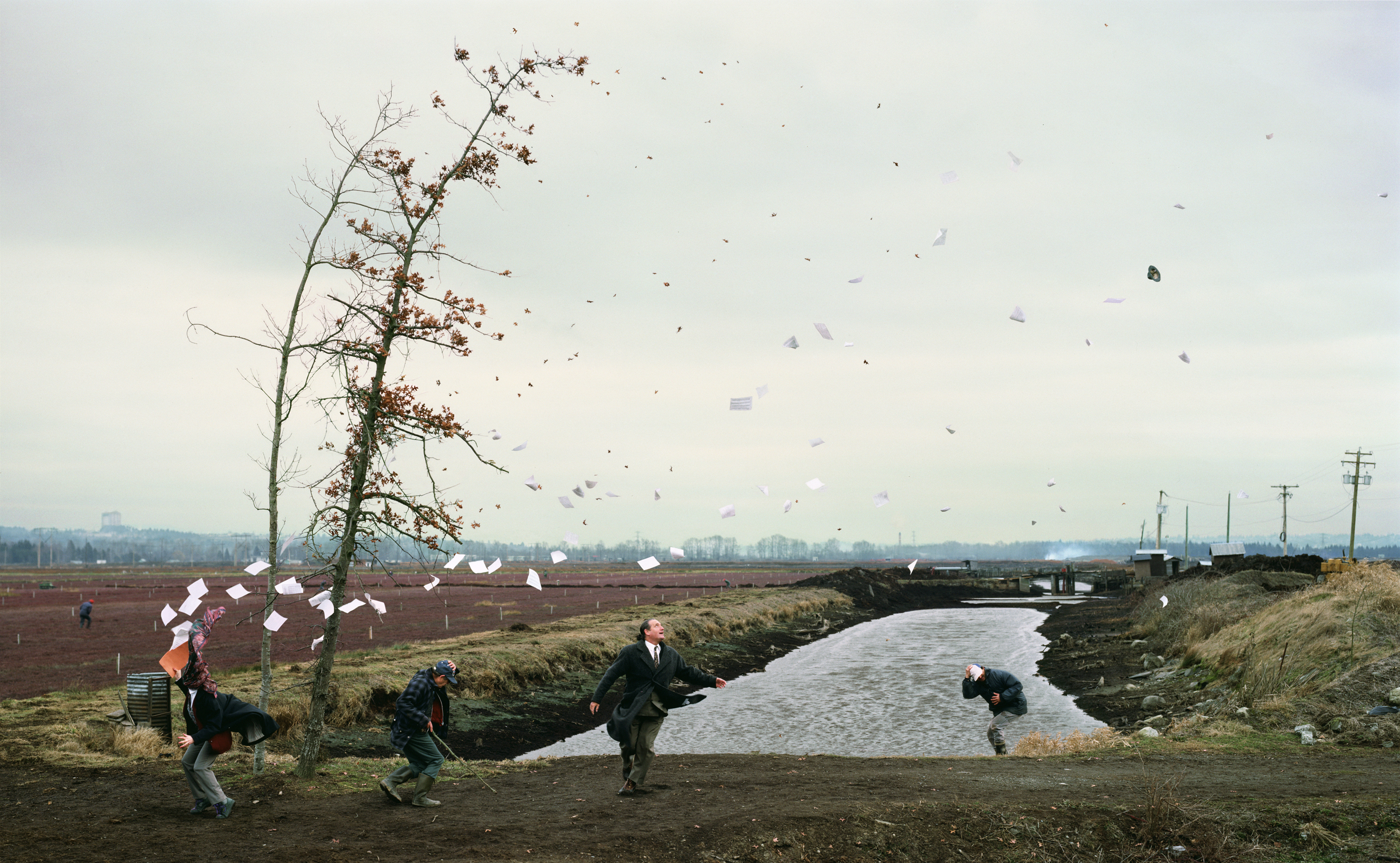
Week Two: Staged & Constructed Photography

From this lecture I was made aware of how many painters took their inspiration from literature and these paintings would later go onto influence photographers work also. A prime example of this is Shakespeare's character, Ophelia (Hamlet) and the painting by John Everett Millais (below)

This iconic painting has since been replicated by photographers such as Tom Hunter and Gregory Crewdson (below)

Other Photographers who works are constructed and staged:

Jeff Wall
Andreas Gursky

Week Two: Pinhole Photography (Practical)

After recieving a lecture on the art of pinhole photography, we were split into groups and shown how to construct a pinhole camera from something as simple as a large black dustbin. Because of the bin already being black,  it became a perfect container in which to photograph some large prints of our surroundings. We experimented with different aperture sizes that were exposed to a setting for more or less time, depending on the size of the hole. After the group activity, we were split into small groups and given the task to take a pinhole camera and photograph something. We set up our pinhole (minus a lid) making a lid out of black plastic wrapping and alot of duct tape, lining it with a large sheet of photographic paper. After that, we decided to photograph outside of the University's grounds by the main road, in an attempt to capture some of the moving light of car's headlights that passed us. We exposed the paper for around 25 seconds before returning to the darkroom and this was our outcome. As you can see from the negative, the static objects such as the trees and the buildings are very clear, but there are lines streaking across the photo from the headlights of cars.
(image reverted to a positive image)

Week Two: Pinhole Photography (Research)

Renowned pinhole photographer Justin Quinnell (website)spent the day with my photography course, broadening our minds and introducing us to the quirky and creative world of pinhole photography, an art that knows no limit to the weird and wonderful things you can use to create an image. Here are some examples of some of his work that I really liked.

The above images show the passing of light from the sun, moon and the stars at night. The trails of light they leave behind create and eerie and ghostly effect that is particularly creepy in the image of the gravestones.

November 21, 2012

Week One: Deadpan Photography: Candida Höfer


When researching deadpan photography, Candida Höfer's series of photographs of libraries caught my attention most of all. Höfer's work is very sober and sterile in its feeling, the lack of people in a place that should be bustling with life; the atmosphere remaining undisturbed. All these factors contribute to the deadpan aesthetic.

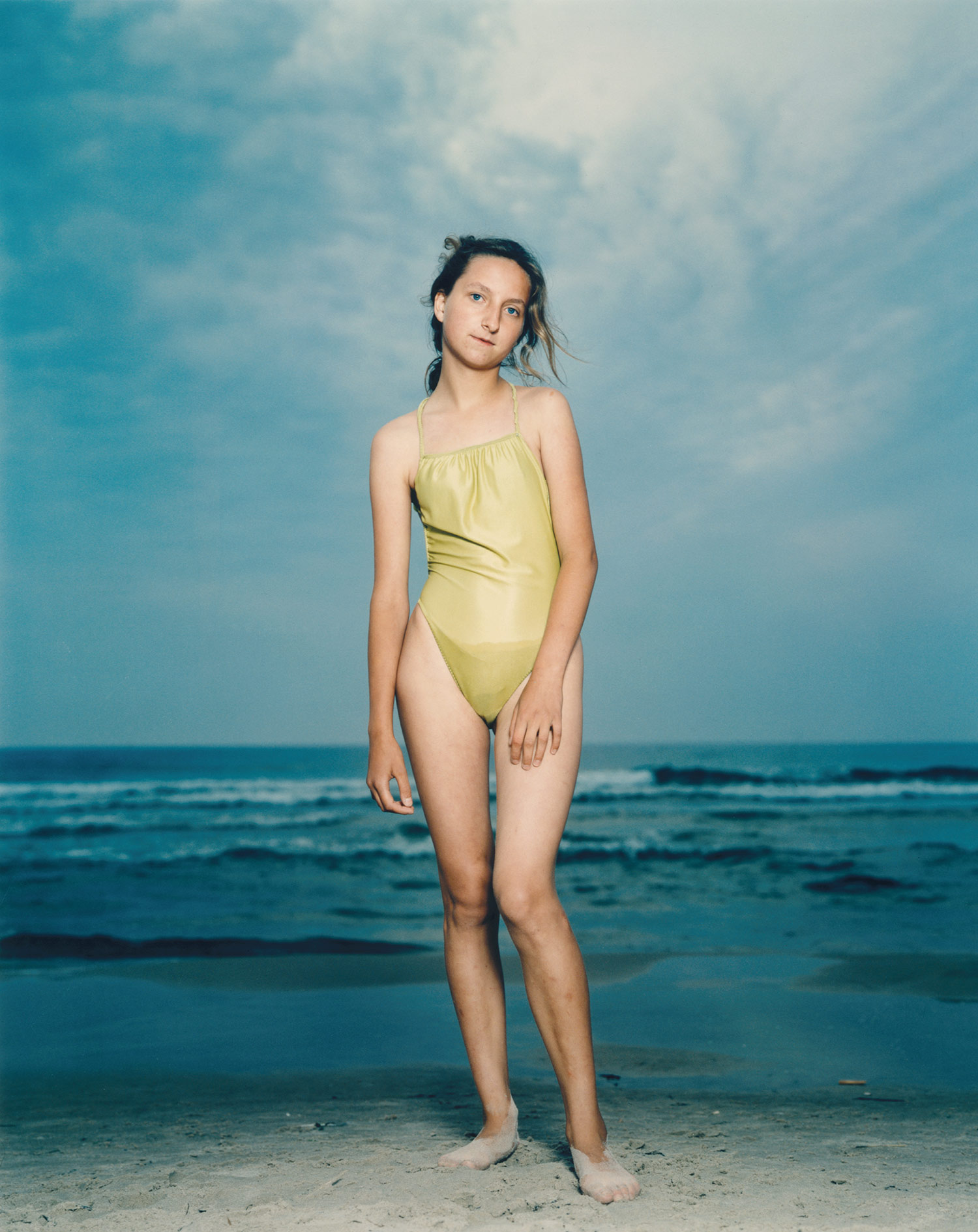
Week One: Deadpan Portraiture & Photography

What is the deadpan aesthetic?

emotional detachment

cool and detached

sharp and scaled

clarity


Photographers of Deadpan Portraiture:


left to right: Thomas Ruff, Rineka Dijkstra


Joel Sternfeld: 'Summer Interns Having Lunch' Wall street, New York, 1987

Week One: Wet Collodion (Primer)


Here is the wet collodion plate that my group had made. 

The portrait is quite clear but will hopefully be clearer once the back has been sprayed black. 

I found the Wet Collodion process very interesting and would consider experimenting with it again.

October 21, 2012

Week One: Wet Collodion (Primer) Research


My introduction to the photography course came in the form of looking at the traditional photographic process of Wet Collodion. This process, founded by Frederick Scott Archer was developed in the 1850s. (source)

As a group, we worked together to create our own collodion prints onto glass plates. 

Above: an example of a wet collodion print by Ellen Susan. (source)


Bibliography

JOURNALS:

1)
British Journal of Photography
November 2012
Volume 159: issue no. 7806
The Portrait Issue
Page: 31-36
Images from the Taylor Wessing Portrait Prize:
Article by: BJP editor Simon Bainbridge
Extract: "...Alma Haser (who BJP named as one of the most promising graduates of 2010) provides the most unusual approach, capturing two of her housemates, and the clever title of 'The Ventriloquist' adds to the mystery. "I asked them to sit on a tiny wobbly coffee table, forcing them to almost cling onto each other" she explains. "Ultimately, I want to turn their verbal banter into a visual image. The title is designed to help viewers make up their own stories about what is going on."

2)
Source
The Photographic Review
Issue 40
Autumn 2004
Page: 8
8 Hours: Martin Newth
Extract: "The series of images was made during my honeymoon- a road trip to the United States in 2001. The photographs show an entire nights sleep in budget motels in California... Exposure time is 8 hours. The night long shots record the movement of the sleeping figures, my wife and I, as vapour trails over the bed. The photographs were made using a custom build large format (10" x 8") camera which was placed on top of the TV each evening. The following morning the negative was developed in the motel bathroom."

3)
British Journal of Photography
July 2012
Volume 159: Issue no. 7802
Stephen Gill
Article By: Sue Steward
Extract: "Ants, birds and microscopic wriggly creatures in pond water, poppy seeds and pressed flowers that partly describes the elements in Stephen Gill's repertoire, which he calls 'descriptive' and which ranges from the early series Hackney Flowers to his recent project Co-Existence, shot in Luxemburg." "...Piles of boxes labelled as dried flowers, seeds and crumpled betting slips sat alongside negatives and contact prints- reminders of his analogue life."

4)
British Journal of Photography
June 2011
Volume 158: Issue 7789
High Velocity (freeze motion)
Extract: "The effect is achieved by freezing the action of a rapid moving subject, using either very fast shutter speeds or very fast flash lighting."
Examples: Marcel Christ for Coca-Cola, Martin Klimas- flowers series, Vincent Skoglund for Nixon watches


BOOKS:

1)
Architecture of Absence
Aperture
Page: 21

Candida Höfer

Extract: "Whether the aura of absence is signalled by the physical dominance of white, the exclusion of man's physical presence, or references to the social activity- without personalisation- that would be consonant with the classification of the interior, Höfer leaves us with uniquely evocative spaces that are not empty. They are devoid of any diversions that would disrupt her transcendental rooms- where nothing is staged, but where, as the architect of order, Höfer leaves nothing to chance."

2)

Andreas Gursky

The Museum of Modern Art (New York)

Author: Peter Galassi

Publisher: MOMA: Thames & Hudson

3)

Eadweard Muybridge 55

Author: Paul Hill

Publisher: Phaidon

Extract: "Eadweard Muybridge (1830-1904) is a key name in early photographic history. His pioneering locomotion studies of the 1870s + 1880s which produced over 20,000 photographs, radically changed the way in which people understood animal and human movement."

4)

Mouthpiece

Justin Quinnell

Publisher: Dewi Lewis Publishing

Extract: "The earliest reference to pinhole was in 5 century BC when the Chinese philosopher Mo-Ti compared light forming an image through a hole to 'an arrow being fired'."

"My own journey started in the early 1990s. Many of my students couldn't afford cameras, but could afford several cans of fizz a day."

5)

Photographs 1978-2004

Jeff Wall

Written by: Sheena Wagstaff

Publisher: Tate Publishing

Extract: "Weaving together the narrative and compositional potential of all three media to create a sympathitc celebration of quotidian life, Wall also spins subtle enigmas within his scenarios, which- if we are prepared to look closely- sharpen our awareness about their subjects without ever leading us to conclude a 'moral to the story'."

6)

The Genius of Photography

How Photography Has Changed Our Lives
By: Gerry Badger

Gregory Crewdson

Work: Ophelia - Digital (Type C) Coloue Print, from series: Twilight

Extract: "Here Crewdson's protagonist floats in her flooded living room, dressed in her lingerie. Her eyes are open, and her slippers are on the stairs above the flood. She may be dead, but there is a ecstatic look on her face and she is floating above the water rather than in it."

(Book also contains the work of Rineka Dijkstra)